 Mandated Insurance Coverage for PANS and PANDAS
Providing Equal and Comparable Access to Medically Necessary Care
Why Insurance Coverage Is Necessary
The Cost of Inaction Is Higher Than the Cost of Care
PANS and PANDAS are immune-mediated conditions marked by sudden or newly worsening neuropsychiatric symptoms, including obsessive-compulsive symptoms, restricted eating, anxiety, aggression, cognitive impairment, and severe functional decline. When physician-prescribed treatment is delayed or denied, these conditions often become more severe, more costly, and more disabling.
Without mandated coverage, patients frequently face insurance denials for medically necessary care, including immune-based therapies. This forces families may delay treatment, depend solely on psychiatric care that does not address the underlying disease, or pay out of pocket, often incurring catastrophic financial costs.
- Delayed or denied treatment increases:
- Emergency department visits and psychiatric hospitalizations
- Prolonged educational disruption, including homebound placement and out-of-district schooling
- Long-term disability and dependence on public systems
- Workforce loss when parents or adult patients are unable to work
- Immeasurable human suffering: Delayed or denied treatment exposes patients and families to severe, debilitating neuropsychiatric symptoms, creating suffering that cannot be captured by cost analyses or claims data. Impacts the entire family
Early identification and appropriate treatment lead to better outcomes and lower overall costs. Without mandated coverage, expenses are shifted to families, schools, emergency systems, and public services, increasing the risk of permanent harm.
Read more about the cost of inaction – Insurance Coverage Gaps and the Case for Mandates in PANS and PANDAS
Precedent: Coverage Is Already Established and Workable
Insurance coverage for PANS and PANDAS is not theoretical. It already exists through legislation or policy in many states, reflecting growing recognition that timely treatment reduces long-term disability and public cost.
States with established PANS/PANDAS insurance coverage include:
Arizona, Arkansas, California, Colorado, Delaware, Georgia, Idaho, Illinois, Indiana, Kansas, Louisiana, Maryland, Massachusetts, Minnesota, New Hampshire, Oregon, Rhode Island, Tennessee, Virginia, and Washington.
A major national insurer recently updated its medical policy to recognize PANS and PANDAS, allowing coverage when diagnostic and medical-necessity criteria are met. This shows that coverage can be implemented responsibly with clear safeguards, clinical review, and documentation standards.
Relying on individual insurer policies creates inequity. Patients with the same diagnosis and severity may receive different care based solely on their insurance plan or state of residence. Mandated coverage ensures consistent, criteria-based access for all patients, replacing a patchwork system that favors financial means over medical need.
Read more about Aetna’s Policy Change
Read more about Legislative Updates & Coverage Map
Financial Impact: Minimal Cost, Significant Protection
Independent actuarial analyses consistently show that mandated PANS/PANDAS coverage has a negligible impact on insurance premiums.
- Virginia estimated the cost of mandated coverage at $0.0046 per member per month—less than half a cent.
- Analyses in other states have found similarly minimal impacts, often measured in fractions of a cent.
- Some insurers have described the cost as immaterial and not significant enough to include in rate filings.
Not all PANS/PANDAS patients require high-cost treatments. Many improve with early diagnosis, treatment of underlying triggers, immune stabilization, and appropriate psychiatric support. Coverage enables individualized, medically appropriate care and reduces reliance on costly crisis-driven interventions.
A review by the Rhode Island Office of the Health Insurance Commissioner (OHIC) confirms that mandated PANS/PANDAS coverage does not meaningfully increase premiums. Although the OHIC report did not find short-term insurer savings, it also did not identify significant cost increases. The analysis did not measure the costs of delayed care, psychiatric hospitalization, educational disruption, long-term disability, or family financial collapse.
In short:
- Mandated coverage does not raise premiums in a meaningful way
- Repealing or failing to enact coverage does not save money
- The highest costs occur when treatment is delayed or denied
Read more about Understanding Rhode Island’s PANS/PANDAS Insurance Report
Legislative Rationale
Mandated insurance coverage for PANS and PANDAS ensures access to medically necessary care at minimal cost, while reducing avoidable disability, educational disruption, workforce loss, and long-term public expense. Without clear coverage standards, costs shift from insurers to families, schools, and public systems. Mandated coverage promotes equitable, criteria-based access to care and improves outcomes by supporting timely treatment. The cost of care is small. The cost of inaction is not.
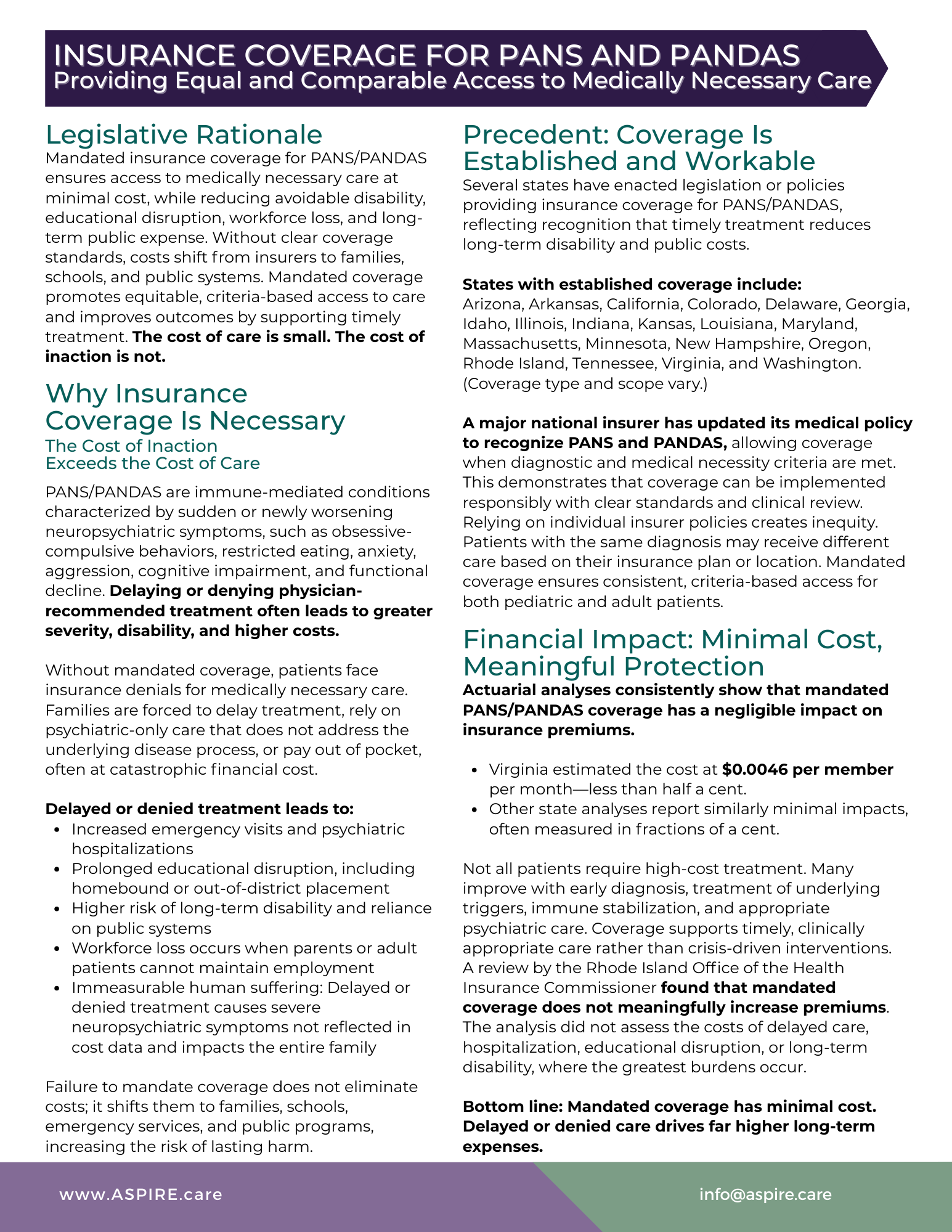
Download PDF The Need for Mandated Insurance Coverage for PANS/PANDAS
(1 page handout recapping information on this page)
The Need for Insurance Coverage for PANS/PANDAS
Return to ASPIRE Legislative Resources
Gabriella True
