Today, representing ASPIRE, I had the opportunity to join the Connecticut delegation for Legislative Day with the Center for Lyme Action.
They are an incredible organization. They provide everything advocates need — background materials, scripts, bill summaries, scheduling support. It is streamlined, organized, and efficient. They have done the hard work to make it possible for everyday people to step into the role of informed advocate.
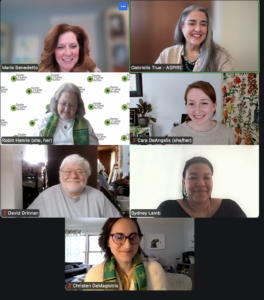
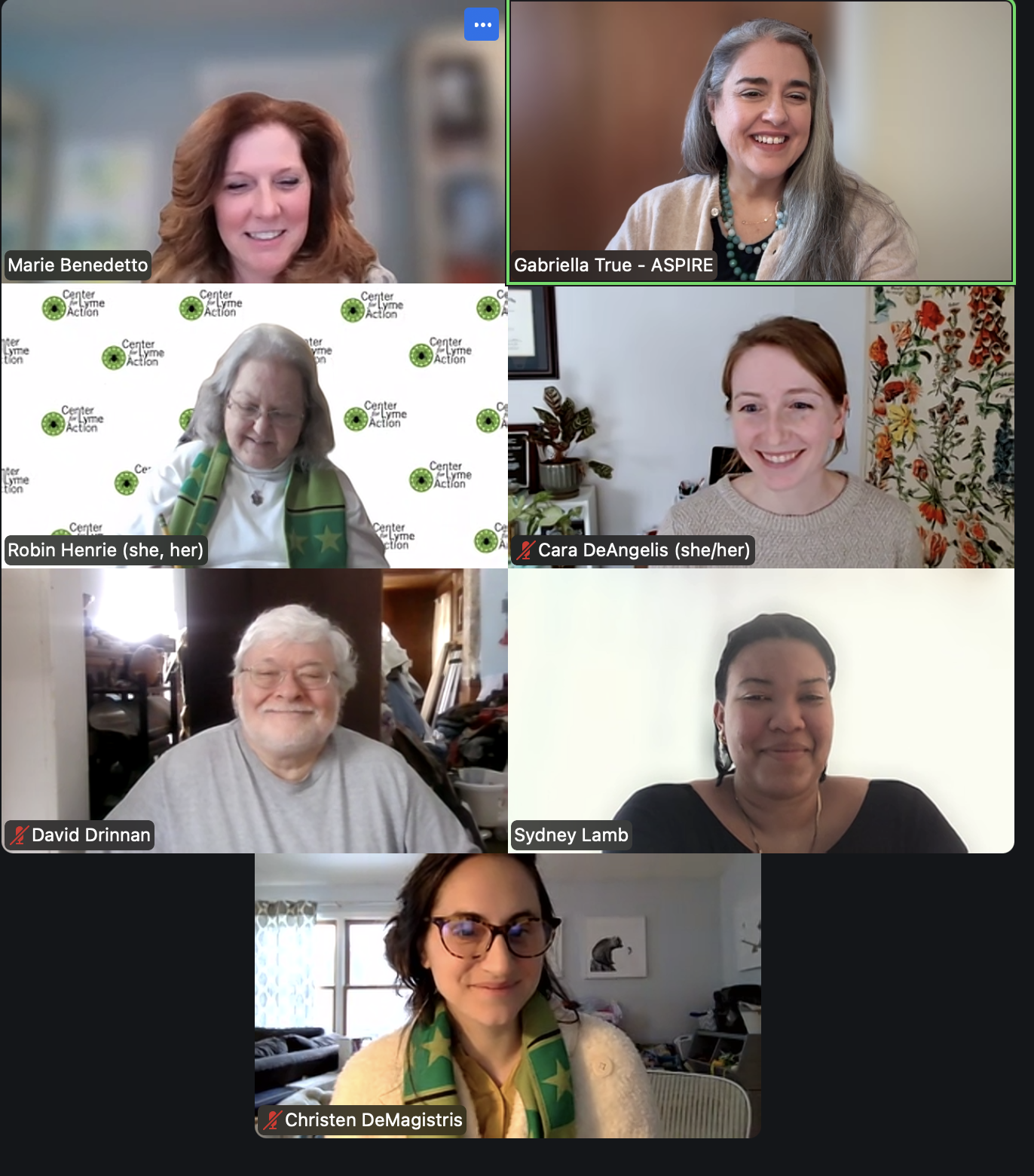
 We met with Senators, Representatives, and health aides to ask them to sponsor key Senate and House bills and to support them if they move into appropriations.
Senator Richard Blumenthal has been a strong advocate for the tick-borne community here in Connecticut and has promised to continue that effort. But this work cannot stay in one state.
Ticks are now in every single state in the union. Even states like Ohio are now seeing a concerning rise in tick populations and growing case numbers.
Lyme disease is one of the fastest-growing infectious diseases in America.
The CDC estimates nearly 500,000 Americans are diagnosed each year.
Federal funding per Lyme patient? About $103.
For comparison:
- West Nile: over $10,000 per patient
- Malaria: over $120,000 per patient
Lyme is not rare. It is not niche. And it is not going away. Yet it remains dramatically underfunded.
 Advocate Stories Matter
As we shared our stories today, we were asked to condense them into one to two minutes.
With my son’s permission, here is his story that I shared.
I have been personally afflicted with Lyme disease, compounded by two COVID infections. At times, it devastated my ability to function.
But today I spoke not only as a patient, I spoke as a mother.
My son went from being a thriving kid — honor roll, lacrosse team, jazz band, working toward Eagle Scout — proud of himself, engaged in his world — to seemingly overnight becoming unrecognizable.
He sat at the dinner table rocking back and forth in a strange voice repeating, “I’m fine. I’m fine. I’m fine.” Unable to get out of bed due to OCD and anxiety. Two days later he was covered in a Bartonella striae rash.
Because he already had access to incredible PANS and Lyme-literate physicians, he received rapid treatment. But healing is rarely linear. Recovery can be unfathomably long.
- He did not attend school for two years. When he returned, it was in a different placement.
- He never went back to jazz band.
- He never finished Eagle Scout.
- He never picked up a lacrosse stick again.
- He lost almost all of his friends, except two who never left his side, and I will forever be grateful to them.
Instead, he endured years of pain, fear, debilitating OCD, anxiety, derealization, rage, and severe depression. It was traumatic. It reshaped his childhood. It changed the trajectory of his adult life. He has come an unbelievably long way. I am deeply grateful to his doctors. I am endlessly proud of how hard he has fought.
But there were very dark days in between. And it is devastating to watch a childhood disappear.
He is one child among far too many.We are one family among far too many.
That is why funding matters.
We are advocating for:
- Better diagnostics — so patients are not left in limbo and chronic cases can be reduced
- More clinical trials — so families have real treatment options
- Support for military members and outdoor workers who are disproportionately exposed
- Education for physicians — so patients are believed and directed to appropriate care
This is not political. It is public health.
If we want fewer families navigating years of misdiagnosis, disability, and trauma then Federal investment must reflect the scope of the crisis.
If you would like to get involved in future advocacy efforts with the Center for Lyme Action or joint efforts with NAPA and CLA. We will share information when registration opens.
You do not need special training. You need your story. And the willingness to tell it in one to two minutes.
That is how change begins.
Gabriella True
