 Self Care With PANS/PANDAS
Living with PANS/PANDAS or similar neuroimmune conditions can touch almost every part of your life. Symptoms might affect your mental health, school, work, relationships, sleep, routines, and daily activities. When flares happen, even simple tasks can feel exhausting or too much to handle.
For many patients and families, self care can be complicated. Most advice about self care focuses on being productive, staying positive, or following wellness routines. But if you have a neuroimmune condition, self care might need to look very different.
Self care can mean resting without feeling guilty. It might also mean leaving a busy place, asking for help, canceling plans, or giving yourself time to recover. During a flare, it could mean doing less, making routines calmer, spending time somewhere quiet, or focusing on feeling steady instead of forcing yourself to push through symptoms.
 PANS/PANDAS symptoms can also cause strong emotional distress. Anxiety, OCD, panic, irritability, sadness, anger, feeling overwhelmed, and confusion are common during flares. Many people feel misunderstood, blamed, or alone, especially when others cannot see their symptoms.
This is why having support is so important.
Self care is not just about what you do on your own. It is also about having connection, understanding, accommodations, and support from your community. Patients and caregivers often deal with a lot of emotional, physical, and financial stress while managing medical care, school issues, changing symptoms, and worries about the future. No one should have to go through this alone.
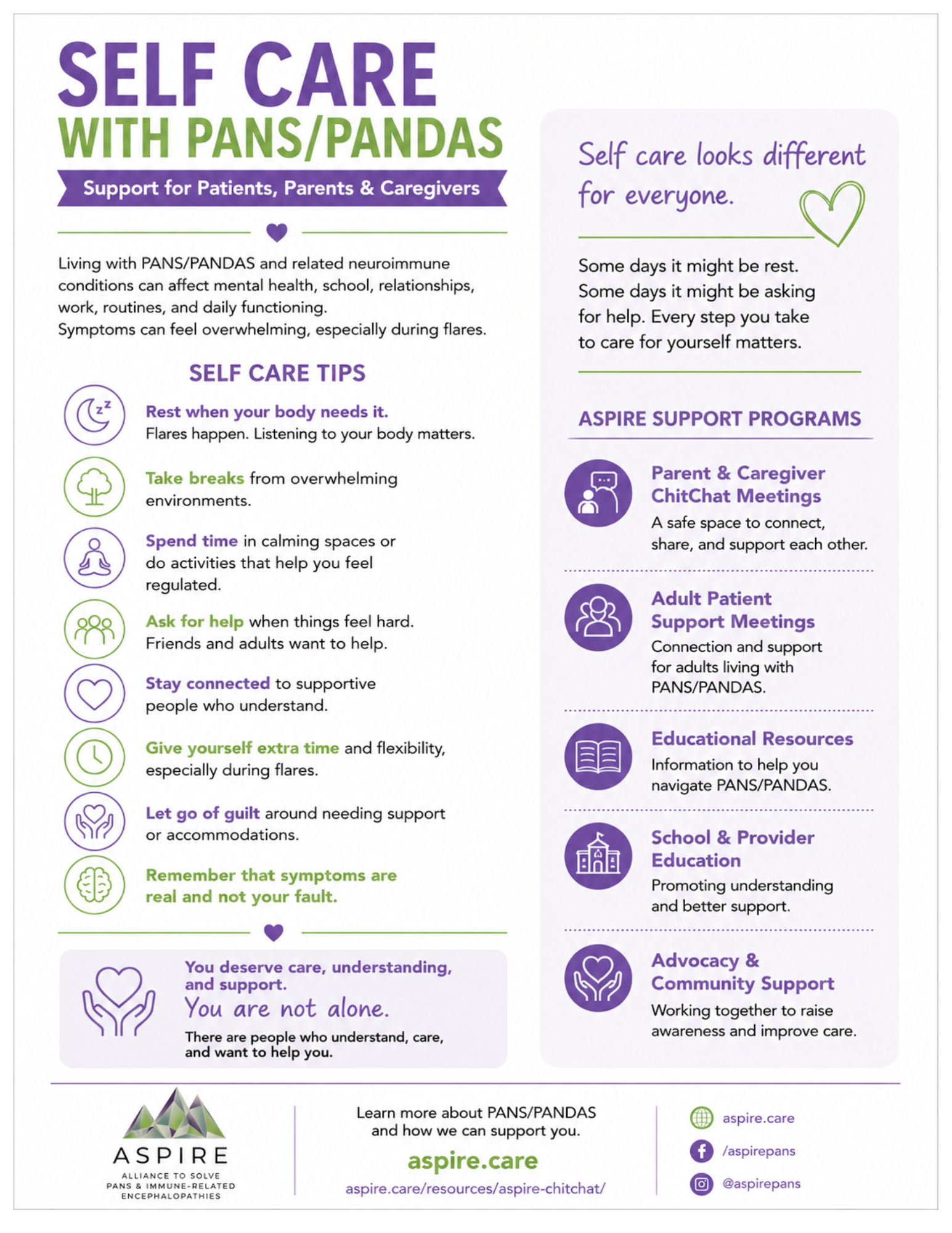
Here are some self-care strategies that might help:
- Taking breaks from overwhelming environments
- Spending time in calming or quiet spaces
- Resting during flares
- Staying connected to supportive people
- Giving yourself extra time and flexibility
- Letting go of guilt around needing support or accommodations
- Asking for help when things feel hard
- Practicing calming or regulating activities
- Remembering that symptoms are real and not your fault
It is important to remember: you did not cause this illness. Needing support does not mean you are weak or a burden. Healing does not always move in a straight line, and having setbacks during flares does not mean you have failed.
At ASPIRE, we believe that support and community are key parts of care. Through our education, advocacy, and support programs, we aim to help patients and families feel informed, connected, and understood.
ASPIRE programs include:
- Parent & Caregiver ChitChat Meetings
- Adult Patient Support Meetings
- Educational Resources
- School & Provider Education
- Community Support & Advocacy
You deserve care, understanding, and support from others.
Gabriella True
