Why State-Mandated Coverage for PANS/PANDAS Is Now Urgent and Justified
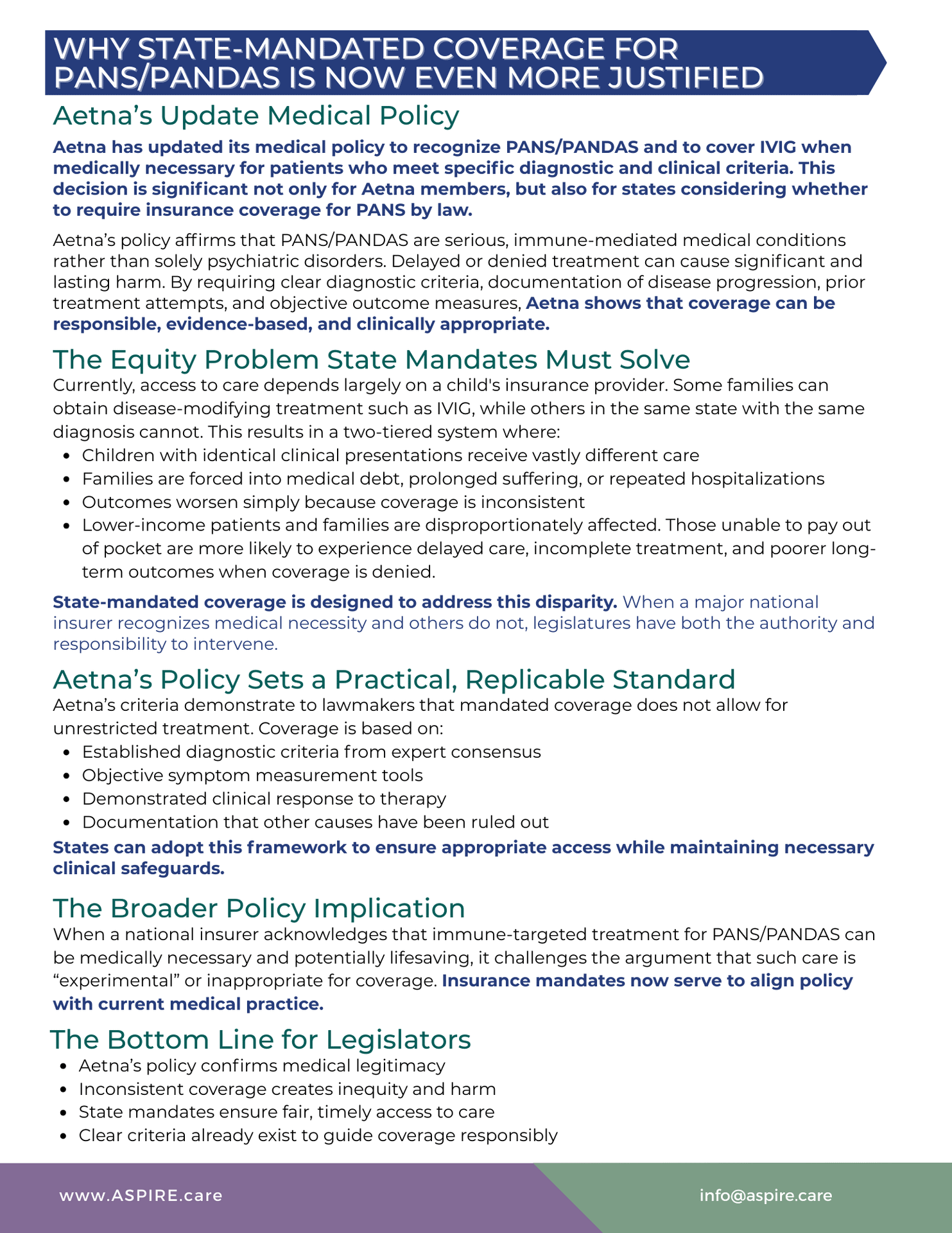
Aetna has updated its medical policy to recognize PANS/PANDAS and to cover IVIG when medically necessary for patients who meet specific diagnostic and clinical criteria. This decision is significant not only for Aetna members but also for states considering whether to require insurance coverage for PANS by law.
Aetna’s policy affirms that PANS/PANDAS are serious, immune-mediated medical conditions rather than solely psychiatric disorders. Delayed or denied treatment can cause significant and lasting harm. By requiring clear diagnostic criteria, documentation of disease progression, prior treatment attempts, and objective outcome measures, Aetna shows that coverage can be responsible, evidence-based, and clinically appropriate
The Equity Problem State Mandates Must Solve
Currently, access to care depends largely on a child’s insurance provider. Some families can obtain disease-modifying treatment such as IVIG, while others in the same state with the same diagnosis cannot. This results in a two-tiered system where:
- Children with identical clinical presentations receive vastly different care
- Families are forced into medical debt, prolonged suffering, or repeated hospitalizations
- Outcomes worsen simply because coverage is inconsistent
- Lower-income patients and families are disproportionately affected. Those unable to pay out of pocket are more likely to experience delayed care, incomplete treatment, and poorer long-term outcomes when coverage is denied.
State-mandated coverage is designed to address this disparity. When a major national insurer recognizes medical necessity and others do not, legislatures have both the authority and responsibility to intervene.
Aetna’s Policy Sets a Practical, Replicable Standard
Aetna’s criteria demonstrate to lawmakers that mandated coverage does not allow for unrestricted treatment. Coverage is based on:
- Established diagnostic criteria from expert consensus
- Objective symptom measurement tools
- Demonstrated clinical response to therapy
- Documentation that other causes have been ruled out
States can adopt this framework to ensure appropriate access while maintaining necessary clinical safeguards.
The Broader Policy Implication
When a national insurer acknowledges that immune-targeted treatment for PANS/PANDAS can be medically necessary and potentially life-saving, it challenges the argument that such care is “experimental” or inappropriate for coverage. Insurance mandates now serve to align policy with current medical practice.
The Bottom Line for Legislators
- Aetna’s policy confirms medical legitimacy
- Inconsistent coverage creates inequity and harm
- State mandates ensure fair, timely access to care
- Clear criteria already exist to guide coverage responsibly
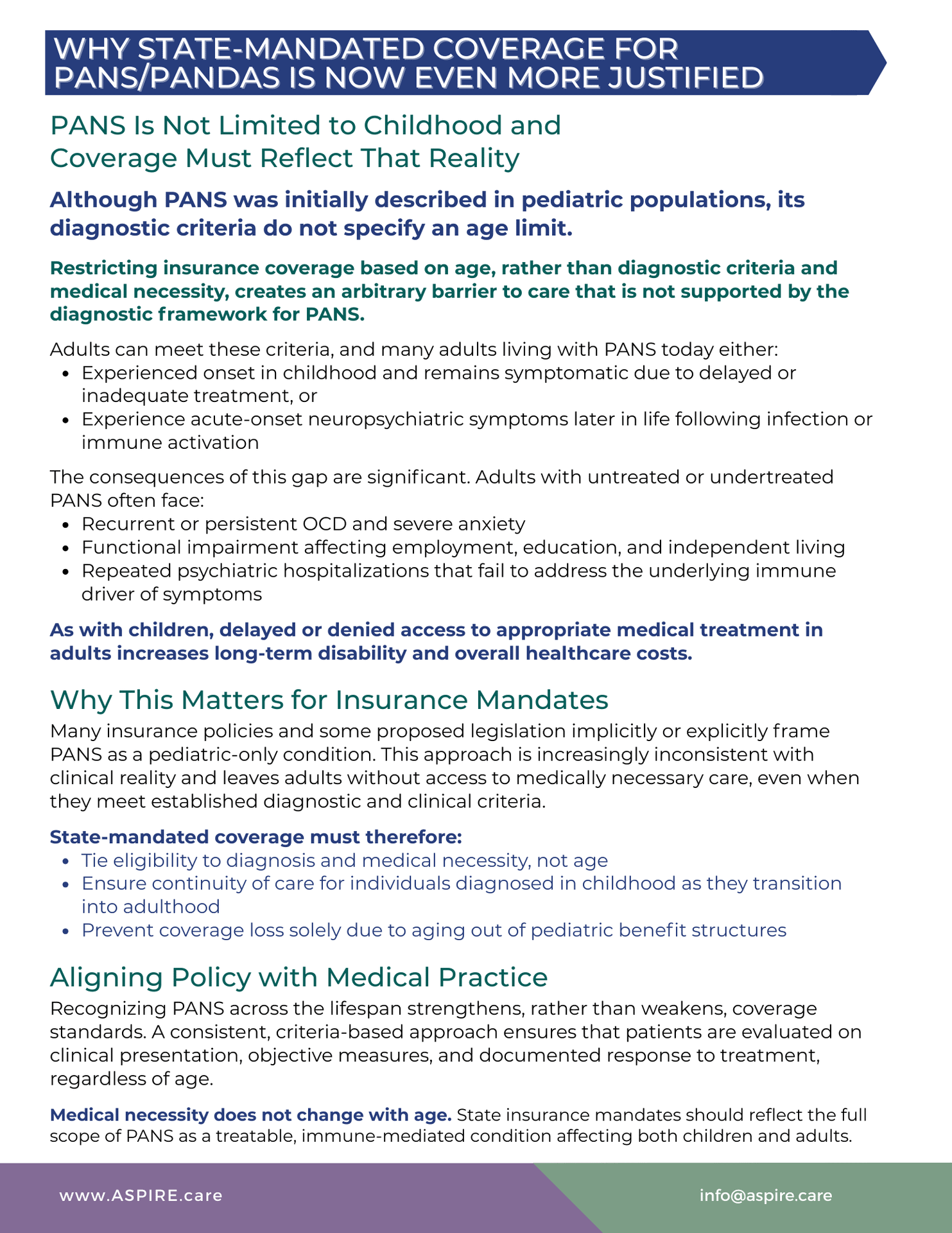
PANS Is Not Limited to Childhood—and Coverage Must Reflect That Reality
Although PANS was initially described in pediatric populations, its diagnostic criteria do not specify an age limit. Adults can meet these criteria, and many adults living with PANS today either:
- Experienced onset in childhood and remains symptomatic due to delayed or inadequate treatment, or
- Experience acute-onset neuropsychiatric symptoms later in life following infection or immune activation
Restricting insurance coverage based on age, rather than diagnostic criteria and medical necessity, creates an arbitrary barrier to care that is not supported by the diagnostic framework for PANS.
The consequences of this gap are significant. Adults with untreated or undertreated PANS often face:
- Recurrent or persistent OCD and severe anxiety
- Functional impairment affecting employment, education, and independent living
- Repeated psychiatric hospitalizations that fail to address the underlying immune driver of symptoms
As with children, delayed or denied access to appropriate medical treatment in adults increases long-term disability and overall healthcare costs.
Why This Matters for Insurance Mandates
Many insurance policies and some proposed legislation implicitly or explicitly frame PANS as a pediatric-only condition. This approach is increasingly inconsistent with clinical reality and leaves adults without access to medically necessary care, even when they meet established diagnostic and clinical criteria.
State-mandated coverage must therefore:
- Tie eligibility to diagnosis and medical necessity, not age
- Ensure continuity of care for individuals diagnosed in childhood as they transition into adulthood
- Prevent coverage loss solely due to aging out of pediatric benefit structures
Aligning Policy With Medical Practice
Recognizing PANS across the lifespan strengthens, rather than weakens, coverage standards. A consistent, criteria-based approach ensures that patients are evaluated on clinical presentation, objective measures, and documented response to treatment, regardless of age.
Medical necessity does not change with age. State insurance mandates should reflect the full scope of PANS as a treatable, immune-mediated condition affecting both children and adults.
Download ASPIRE’s Statement on Aetna’s Policy
ASPIRE Aetna Policy Legislative Statement
Return to ASPIRE Legislative Resources
Gabriella True
