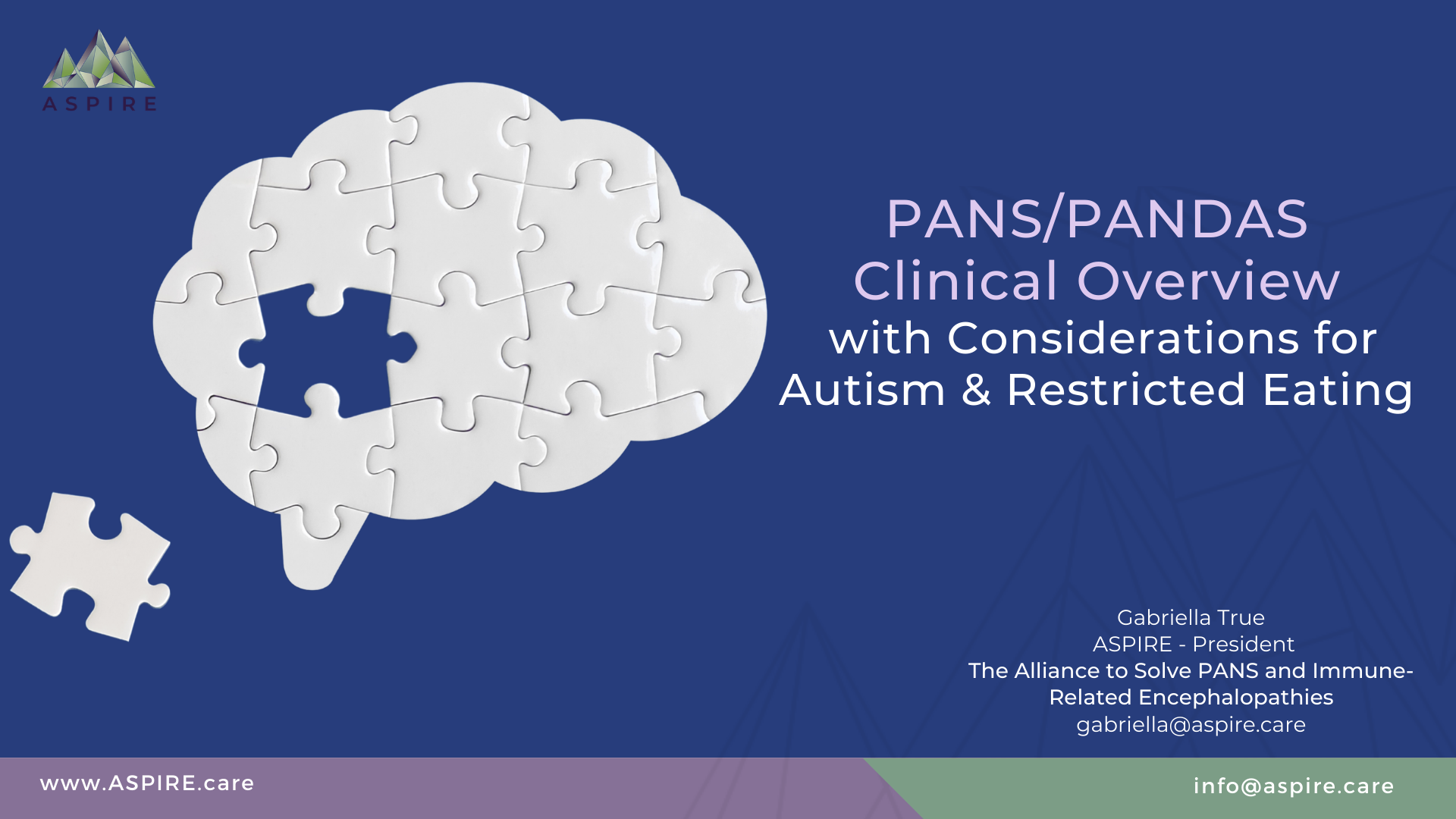
 PANS/PANDAS Clinical Overview with Considerations for Autism & Restricted Eating
Presented for ACAYNA
ACAYNA is an autism-focused organization committed to advancing clinician education and evidence-based practice. Through professional training, via TEA Intervención Nutricional and specialized coursework, ACAYNA helps providers deepen their understanding of neurodevelopmental conditions and complex clinical presentations, especially where autism overlaps with medical and nutritional issues.
As part of their clinical education offerings, Gabriella True, ASPIRE President, presented a comprehensive overview of PANS and PANDAS, with particular attention to how these neuroimmune conditions may present in autistic individuals and how restricted eating may reflect more than behavioral or developmental factors alone.
Autistic individuals with sudden psychiatric changes, regression, or abrupt shifts in eating behavior require thorough medical evaluation. Immune-mediated neuroinflammation can trigger or intensify anxiety, obsessive-compulsive symptoms, sensory hypersensitivity, and feeding difficulties. When food restriction appears suddenly or worsens rapidly, clinicians should assess for possible inflammatory or infectious triggers.
The following framework was emphasized:
Food Selectivity as a Possible Organic Manifestation in the Context of PANS/PANDAS:
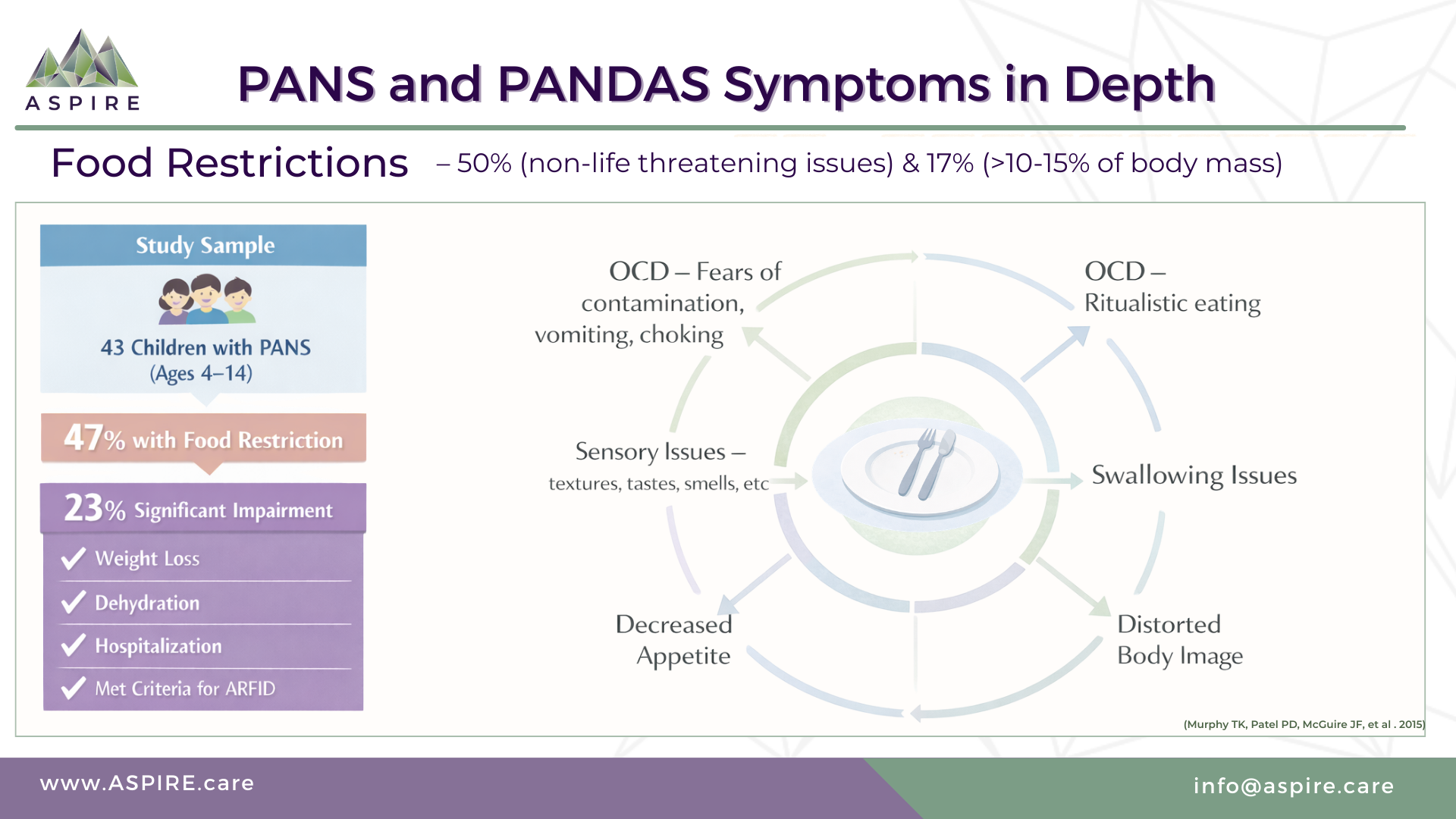
This condition, characterized by the sudden onset or newly worsening neuropsychiatric symptoms, may also involve abrupt changes in eating behavior. In PANS/PANDAS, restricted eating frequently emerges alongside obsessive-compulsive symptoms. Common drivers include contamination fears related to food, fear of choking or vomiting, fear of swallowing, or rigid “just right” requirements surrounding food preparation, safety, or presentation. Immune dysregulation and inflammatory responses may heighten anxiety and sensory processing differences. Food selectivity in PANS/PANDAS is often associated with sensory hypersensitivity or intolerance to specific textures, flavors, and smells, complicating nutritional intake. Obsessive-compulsive fears and sensory sensitivities often interact, making eating both psychologically and physiologically distressing. In a small subset of patients, restricted eating can be associated with body image issues. Some patients may be diagnosed with Avoidant/Restrictive Food Intake Disorder (ARFID) and Anorexia nervosa. Restricted eating in PANS/PANDAS can reflect overlapping medical, psychiatric, and sensory factors, so a comprehensive assessment is essential. An integrated approach that combines medical treatment of the underlying trigger with nutritional and therapeutic interventions is critical for effective management.
This condition, characterized by the sudden onset or newly worsening neuropsychiatric symptoms, may also involve abrupt changes in eating behavior. In PANS/PANDAS, restricted eating frequently emerges alongside obsessive-compulsive symptoms. Common drivers include contamination fears related to food, fear of choking or vomiting, fear of swallowing, or rigid “just right” requirements surrounding food preparation, safety, or presentation. Immune dysregulation and inflammatory responses may heighten anxiety and sensory processing differences. Food selectivity in PANS/PANDAS is often associated with sensory hypersensitivity or intolerance to specific textures, flavors, and smells, complicating nutritional intake. Obsessive-compulsive fears and sensory sensitivities often interact, making eating both psychologically and physiologically distressing. In a small subset of patients, restricted eating can be associated with body image issues. Some patients may be diagnosed with Avoidant/Restrictive Food Intake Disorder (ARFID) and Anorexia nervosa. Restricted eating in PANS/PANDAS can reflect overlapping medical, psychiatric, and sensory factors, so a comprehensive assessment is essential. An integrated approach that combines medical treatment of the underlying trigger with nutritional and therapeutic interventions is critical for effective management.
This training emphasized the importance of interdisciplinary collaboration among medical providers, nutrition professionals, therapists, and autism specialists. This approach helps ensure that sudden behavioral or feeding changes are not misattributed solely to autism when an underlying medical process may be responsible.
ACAYNA’s commitment to expanding clinical knowledge in autism and nutritional intervention creates an essential platform for these discussions. Accurately distinguishing between developmental traits and acute medical changes is critical for appropriate treatment and long-term outcomes.
Gabriella True
