
January 4, 2026
Iowa PANS PANDAS Updates
The deadline to make the first funnel is March 4th. Calls/emails really need to be made by Monday, March 1st as this committee generally only meets on...
The deadline to make the first funnel is March 4th. Calls/emails really need to be made by Monday, March 1st as this committee generally only meets on...
Bullying & PANS/PANDAS Bullying is a frequent concern within the PANS/PANDAS community. Bullying is never the child’s fault. When symptoms are misunderstood, children may be labeled as...
Supportive Oligonucleotide Therapy (SOT): Emerging Approaches in Lyme Disease Treatment An increasing number of patients in the community are exploring Supportive Oligonucleotide Therapy (SOT), with...
Breitschwerdt EB, Maggi RG, Bush JC, Kingston E. Babesia and Bartonella Species DNA in Blood and Enrichment Blood Cultures from People with Chronic Fatigue and Concurrent Neurological Symptoms. Pathogens. 2026; 15(1):2. doi.org/10.3390/pathogens15010002
LaDeau, Shannon L., KellyOggenfuss, AlexanderSchmidt, SaravananThangamani, and Richard S.Ostfeld. 2025. “Ecological Dynamics of Blacklegged Ticks, Vertebrate Hosts, and Associated Zoonotic Pathogens in Northeastern Forests.” Ecosphere16(12): e70508. https://doi.org/10.1002/ecs2.70508
Researchers tested 2,000+ blacklegged ticks in New York over 9 years
• 38% of ticks carried at least one pathogen capable of infecting humans
• About 10% carried multiple pathogens (co-infection)
• The most common combination was Lyme disease + Babesia microti
• Babesia was found in 21% of ticks, higher than previous estimates
• Bartonella was not detected in the ticks tested at these study sites
New Jersey Legislative Action is lead by Alissa Johnson. Please contact her directly to become involved in legislative advocacy in New Jersey. Alissa is Co-Founder and Advisor The Louisa...

WE HAVE A CALL TO ACTION for House Bill #488 that requires insurance coverage for PANDAS/PANS kids in...
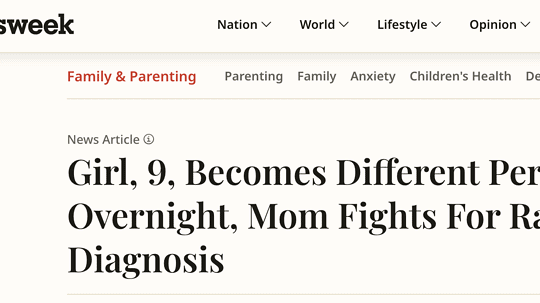
Lacy was an outgoing, fun nine-year-old. Then, one night, everything changed. She became a shell of herself. Her mother, Crystal, 30, from Illinois, told Newsweek she can only describe last year...

College with PANS/PANDAS: Your Story Matters Starting college can be challenging for any young adult. For students living with PANS/PANDAS, the transition often comes with added layers—managing...

Starting college is an exciting milestone, but for students with PANS/PANDAS, the transition can feel especially overwhelming. Balancing academics, health needs, and independence requires careful...
Danieli, M.G.; Buti, E.; Longhi, E.; et al. Advancing Our Understanding of IVIg in Pediatric Acute-Onset Neuropsychiatric Syndrome. Journal of Mosaic of Autoimmunity 2025, 1 (2), 5. doi.org/10.53941/jmai.2025.100012
Reviews intravenous immunoglobulin (IVIg) as a pooled IgG product with broad immunomodulatory and anti-inflammatory effects.
Describes mechanisms including modulation of Fcγ receptors, inhibition of complement activation, cytokine regulation, and control of pro-inflammatory immune cells.
Explains that IVIg can influence both innate and adaptive immune systems, including via epigenetic mechanisms.
Summarizes evidence indicating IVIg can attenuate neuropsychiatric symptoms and restore immune balance in children with PANS.
Notes variability in randomized trial outcomes but highlights converging clinical and mechanistic support for IVIg in selected patients.
Emphasizes the need for biomarker-guided studies to identify responders and optimize treatment strategies.
